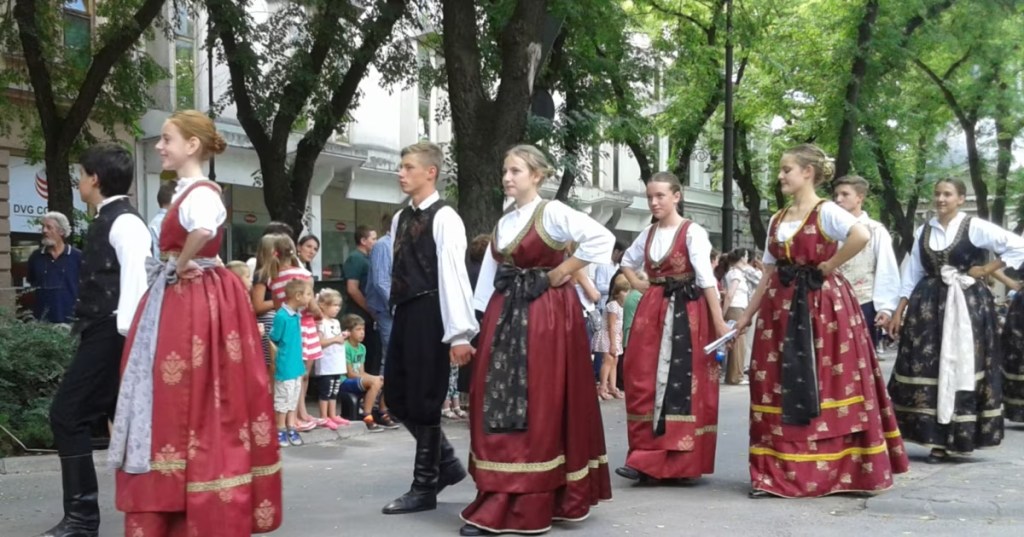
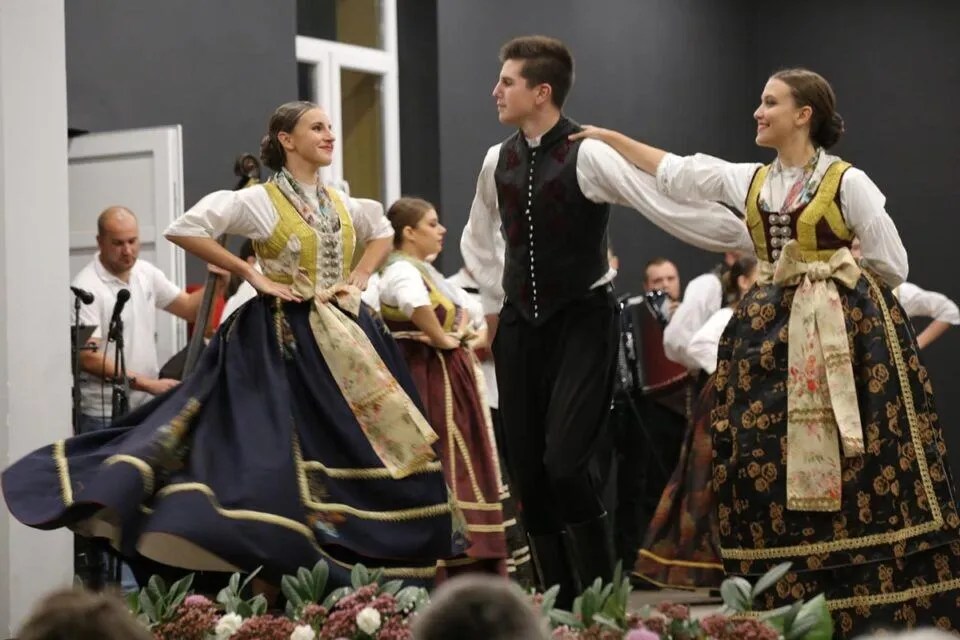
Bunjevci are a Croatian ethnic group divided into three branches: 1) Danubian Bunjevci (Bačka, southern Hungary and Budapest area), 2) Primorje-Lika Bunjevci (Croatian Primorje, Lika and Gorski Kotar) and 3) Dalmatian Bunjevci (Dalmatia with the Dinaric hinterland, southwestern Herzegovina). Bunjevci Croats are believed to have originated in Dalmatia and western Herzegovina, although according to the latest scientific findings, the origin of their ethnogenesis is the southeastern Dinaric-Adriatic border area. Various cultural elements interwoven there, which provided the basis for the emergence and formation of the Croatian group called Bunjevci. These processes probably began at the time of the first Slav incursions towards the Adriatic, and perhaps even earlier, but certainly under the threat of Turkish military incursions. Bunjevci separated and left their original area and in several waves of migration found new homelands, where they still live today. As the most compact ethnic group, Bunjevci have been preserved in northwestern Bačka in Vojvodina and the Hungarian part of Bačka. Apparently, precisely because they lived for centuries among members of other peoples and despite the unfavorable interethnic environment and difficult political circumstances (Magyarization, Serbization), their sense of belonging to the Croatian people was not erased. Studies and discussions on the origin of the name „Bunjevac“ have not yielded viable claims (e.g. according to the name of the Buna River in Herzegovina, as the area of their presumed ancestral homeland, or according to the type of dwellings in which they lived – “bunja”), and therefore it remains unknown where the name of this Croatian group came from. Scientific study of historical sources, analysis of ethnological indicators, and linguistic research show the cultural connection and closeness of all three present-day Bunjevac branches. The fundamental factors of distinctiveness, recognizability, unity and identification of this Croatian group have been established by the aforementioned disciplines in the ethnic name Bunjevac, speech, and culture with a number of regional, specifically Bunjevac elements, e.g. in wedding and other customs, folk music, etc.
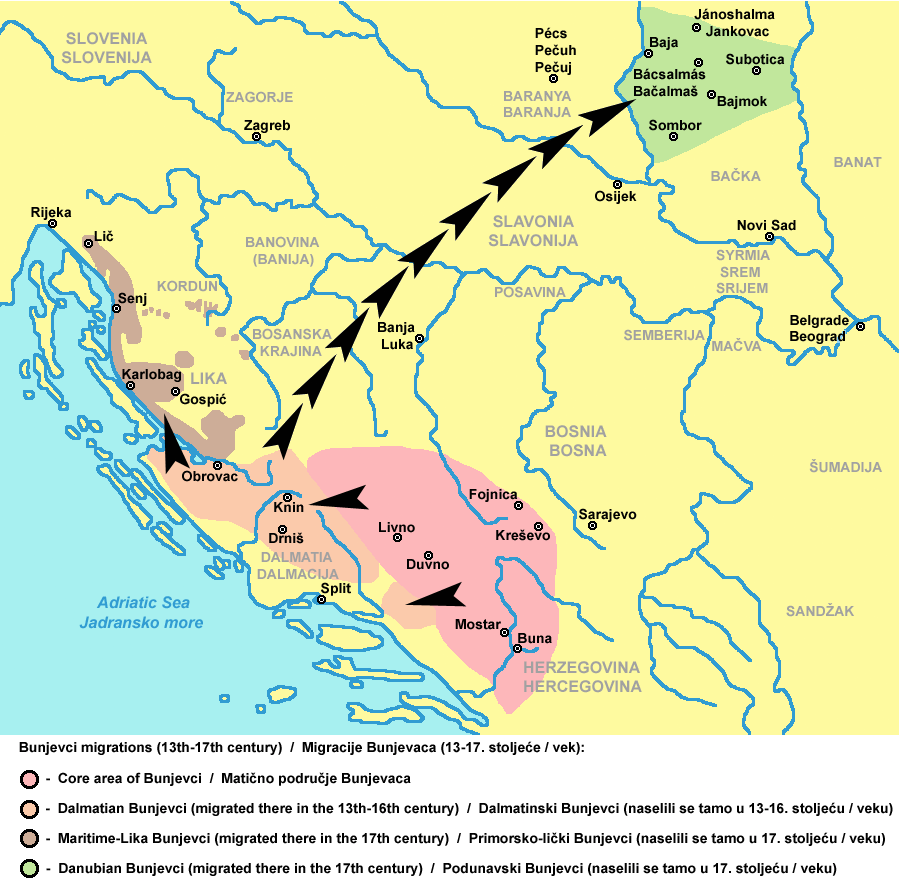
At the beginning of the 17th century, Bunjevci raised an uprising against the Lika sanjak-bey, but were defeated and subjected to reprisals. From then on, they began to move: in 1605 to Lič near Fužine, and in 1627, around 2,000 families moved to the Danube region from Baja via Kalocsa to Buda. The Bunjevci in Lič originated from Zemunik from the village of Krmpot. Around 1630, these Krmpot people, in about thirty families, moved to the coast and settled first today’s Krmpoti, and then gradually the Senj and Baško foothills, where they merged with those Bunjevci who had penetrated the same territory from Zrmanja and Zemunik. After the defeat of the Ottomans in Lika, between 1683 and 1687, the majority of the coastal Bunjevci moved to Lika. From there, they moved more frequently to Slavonia, Pounje, Pokuplje and the area around Bjelovar.
Although Bunjevci began to settle in Bačka in the first half of the 17th century, they continued to settle there later. A large wave of Bunjevci settlers arrived in Bačka during the Vienna War (1683–1699) and after the campaign of Prince Eugene of Savoy in 1697, and new settlements continued in the 18th century. Bunjevci in Bačka significantly contributed to the expulsion of the Ottomans from southern Hungary. They suffered many casualties, and in peaceful times they felt strong pressure from Hungarian feudal lords. Catholic priests played a major role among the Bunjevci, especially those from Bačka, especially the Franciscans of Bosnia Srebrena, who were entrusted with the pastoral care of the Catholics there even during the Ottoman rule. The following Franciscans who worked among the Bunjevci of Bačka are known: M. Radnić, Lovro Bračuljević, E. Pavić, N. Kesić and others.
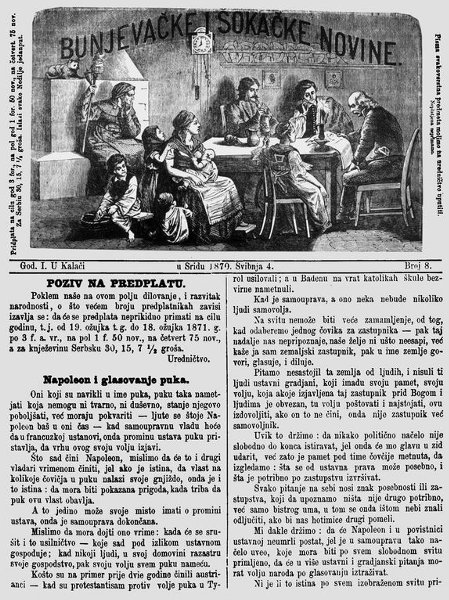
At the end of the 18th century and especially in the 19th century, the state authorities began to settle Germans and Hungarians in fertile areas, which was supposed to serve the denationalization of the South Slavic population. Bunjevci, mostly peasants without a developed national culture and strong intelligence of their own, and separated from Croatia, were exposed to strong Magyarization. Several Bunjevci families acquired nobility (Vojnić, Grašalković, Antunović, Mamužić), and some of them were real landowners (Vojnić, Latinović). Bunjevci also had a developed bourgeoisie, which played an important role in the cities of Sombor, Subotica and Baja. It was not until the 19th century, with the national homogenization of the Hungarians, that the ties of the Bačka Bunjevci with other Croats began to be seriously severed. State and church institutions worked in Bačka on Hungarian national integration, and this often turned into forced Magyarization of the Bačka Bunjevci, from which they suffered most in their noble and bourgeois ranks. Along with colonization, Magyarization was carried out through Hungarian priests, by introducing Hungarian as the official language (in Subotica in 1839) and the language of instruction (the Croatian language was abolished in schools between 1868 and 1897), by banning Bunjevac folk societies, persecuting their press, and preventing the use of the folk name. The first to rise up in the national defense of the Bunjevac people was Ivan Antunović, who in 1870 launched the “Bunjevačke i Šokacke novine”, in 1871 published the “Bunjevačka i Šokacke vila” and in 1882 wrote the valuable “Razvaru o podunavskih i potiskih Bunjevaci i Šokci”. He, like Boza (Ambrozije) Šarčević, demanded linguistic equality in domestic life, in lower schools and municipalities, and only Blaž Modrošić was more decisive and demanded recognition of the nationality and language in public life and equality with Hungarians. Antunović’s cultural work developed into a national-political movement through the involvement of his students: Pajo Kujundžić (published and edited the calendar “Subotička danica”, 1884–1914), Mijo Mandić (founded and edited “Neven”, 1884–1914) and Kalor Milodanović (published and edited “Subotički glasnik” from 1876). In addition, in 1878, the People’s Casino was founded in Subotica, which became the center of Croatian social life among the Bunjevci. Although the Bunjevci revival and resistance to Magyarization progressed, it did not produce formal results until 1918, so Bunjevci welcomed the coup as a way out of their difficult situation. Under the leadership of Blaško Rajić, a national liberation movement developed among them. On November 10, at a large national assembly in Subotica, its secession from Hungary was proclaimed. Together with Serbs, Bunjevci established national councils and proclaimed the unification of Vojvodina with other South Slavic countries into a new common state. With the Treaty of Trianon (signed on June 4, 1920), almost half of Bunjevci and Šokci Croats (about 180,000) remained under the Hungarians and were exposed to Magyarization. In Yugoslavia, Bunjevci did not secure national freedom either, but were even subjected to violent Serbization. Bunjevci of Bačka agreed with the policies of the HSS and supported its leaders, especially Vladko Maček. The greatest manifestation of unity took place in 1936 in Subotica on the occasion of the celebration of the 300th anniversary of the arrival of the largest group of Bunjevci in Bačka. During the occupations of 1941–1945, a large part of the Bunjevci fled from Bačka before the Hungarian occupying forces. Towards the end of Yugoslavia and after its dissolution in 1991, the position of Bunjevci deteriorated again. Their emigration from Bačka increased, and among those who remained, the Serbian authorities encouraged denationalization, including by separating the “Bunjevac” ethnic category from the unified Croatian corpus.

